BY DR NICKY THOMAS, WYNNUM MANLY VETERINARY HOSPITAL
 Bladder stones are rock-like formations of minerals that develop in the urinary bladder of dogs and cats. Normal urine contains minerals; changes in urine pH and concentration result in these minerals forming crystals, and over time, the crystals may form stones. There may be anywhere from one to hundreds of stones, which can range in size from sand-like grains to 5cm rocks.
Types of stones
- Struvites – these are the most common bladder stones in dogs and cats. Struvite stones may develop as a result of a urinary tract infection, as bacteria may cause changes in the urine pH, leading to more alkaline or ‘basic’ urine, which allows stones to form. Struvite stones without bacterial infection can occur in cats and often play a role in idiopathic cystitis (Feline Lower Urinary Tract Disease).
- Calcium oxalate – these stones form in more acidic urine and are less likely with infection.
- Other stones can form as a result of toxins such as anti-freeze (not very common in Queensland!)
or may be breed-related – urate cystoliths in Dalmatians is one example. - Clinical signs of bladder stones
Clinical signs of bladder stones may include:
- Straining to urinate
- Passing small amounts of urine frequently
- Urinating in unusual places
- Vocalising when urinating
- Licking of the genital region
- Strong odour to urine
- Blood in urine
Diagnosis of bladder stones
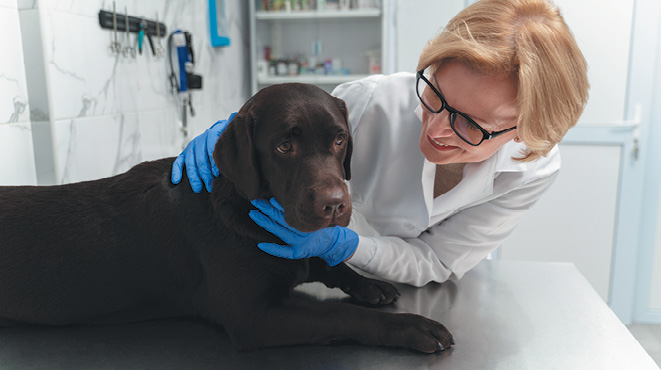
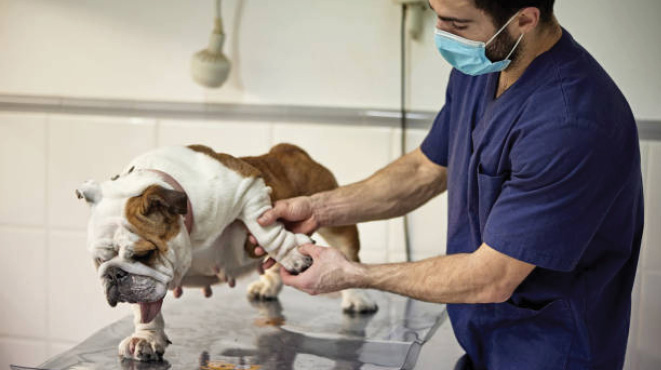
Diagnosis of bladder stones begins with a physical examination – sometimes, your vet may be able to palpate the stones within the bladder. Urine testing is important for checking the pH of the urine and examining a sample for evidence of infection or the presence of obvious crystals. Imaging of the bladder with radiographs and/or ultrasound are required for definitive diagnosis.
Treatment of bladder stones
Treatment depends on the type of stones present and may include antibiotics for urinary tract infections, as well as a diet change to adjust the pH of the urine. In some cases, a diet change may be sufficient to dissolve the stones. Surgical treatment may be recommended for your pet – your vet may perform a cystotomy to physically remove the stones from the bladder.