BY DR ROGER DOWN, MBBS, FRCS, FRACS, MD (LOND)
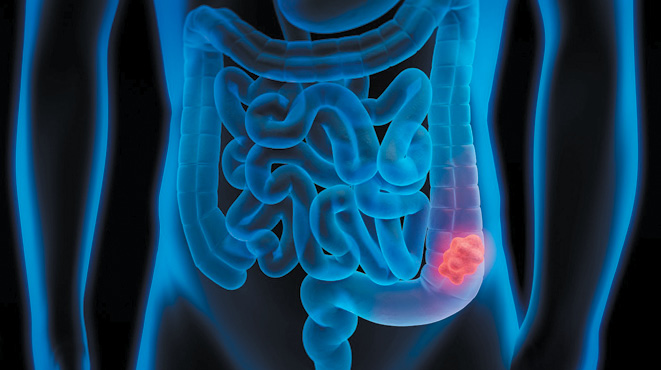
 Bowel cancer can occur at any age from 12 to 100 years of age. It almost only affects the large bowel – the colon and rectum. Small bowel cancer is extremely rare, probably due to the very rapid transit of residue after food absorption. No one is safe from bowel cancer. Start using unprocessed bran, the only known protector from the commonest cancer. Low-dose aspirin may also be protective.
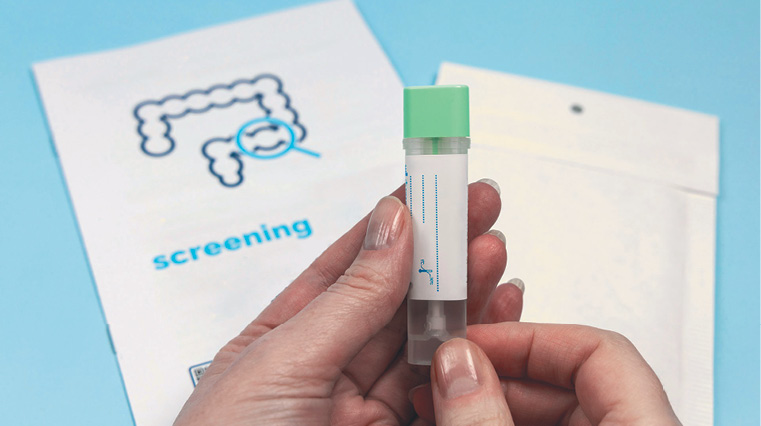
We do know that a family history of bowel cancer increases the risk for other family members. Those whose sibling has had bowel cancer have an increased risk of one-in-eight of developing the disease at some time in their life. If two family members have had bowel cancer, the risk is one-in-four! Clearly, there is a genetic predisposition in some families. These persons must have a colonoscopy check starting 10 years before the relative developed the disease to remove any polyps. Do not rely on a stool test.
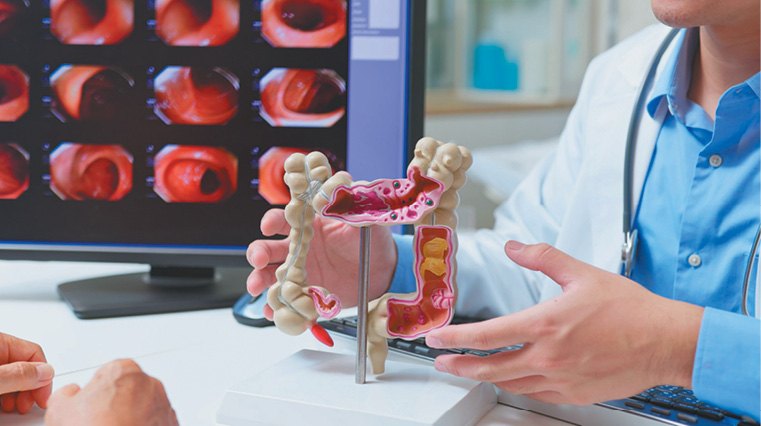
Colonic polyps are common. There are four major types:
Hyperplastic polyps: These are small, flat white polyps that occur anywhere in the bowel and carry no risk of becoming cancerous. However, to diagnose them, they should be removed.
Serratias polyps: These are flat sessile polyps which occur mainly on the right side of the colon in the ascending colon-appendix area. Most are benign, but recently some of these have been associated with cancer development.
Adenomatous polyps: These can be small or large, sessile or pedunculated and occur in all areas of the colon and rectum, but commonly in the sigmoid and descending colon. They, with time, will develop malignant change in their structure to become a cancer. The time taken for this to happen is unknown. They are less likely and slower to change than the villous tumours.
Villous polyps: These are flat, sessile polyps that can affect a large area of the bowel, often several centimetres, and are most common in the rectum and ascending colon, but can occur anywhere. They tend to undergo much more rapid transition to cancer and are often aggressive.
Barium studies may detect a polyp, but cannot treat them, so colonoscopy is essential. All polyps MUST be removed during a colonoscopy. Once you have had any of the last three polyps, regular checks every three years must be undertaken after the first one-year check is clear.
More next time; God bless.