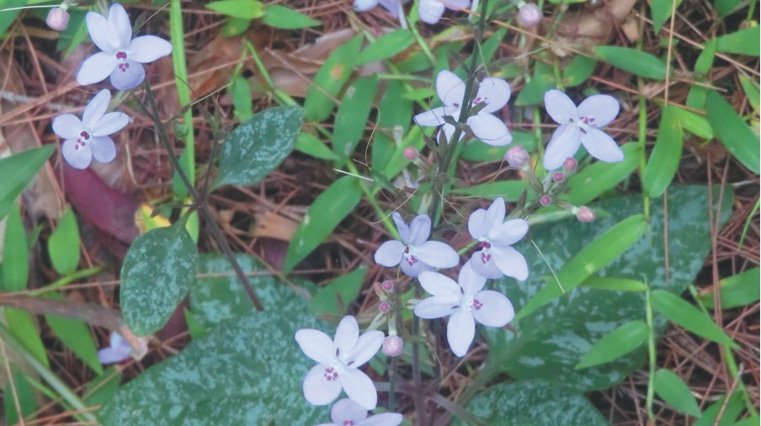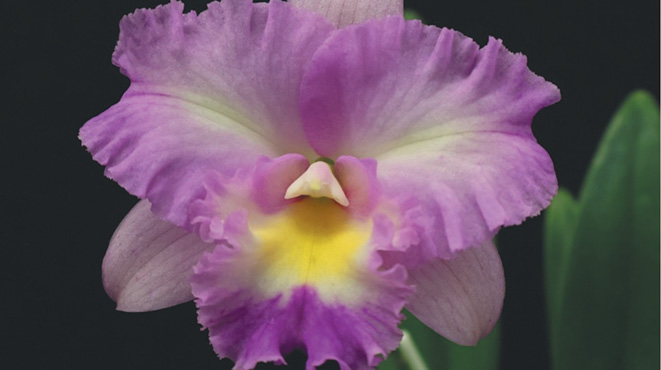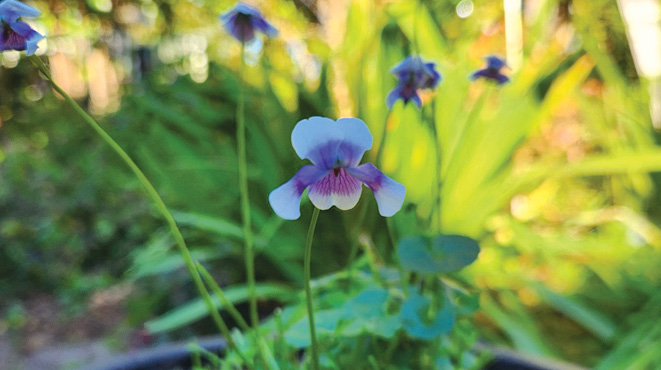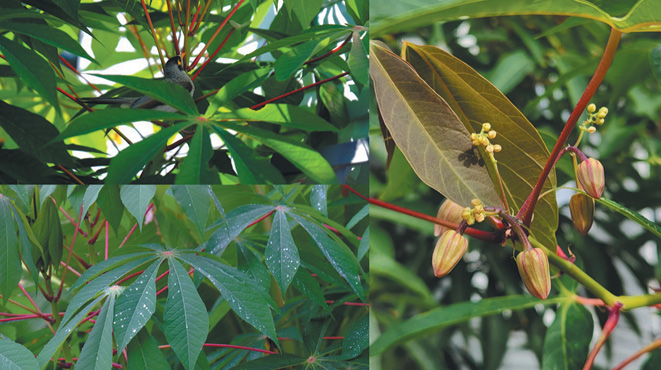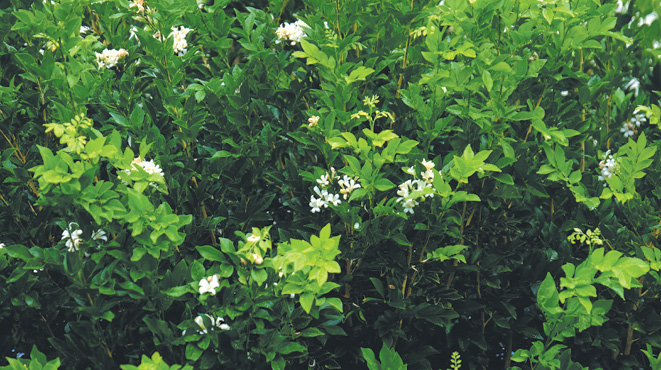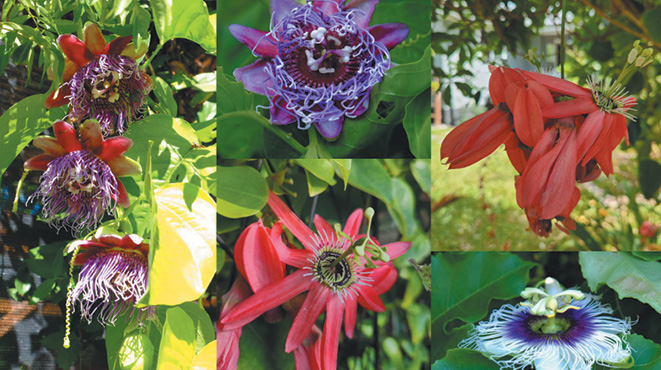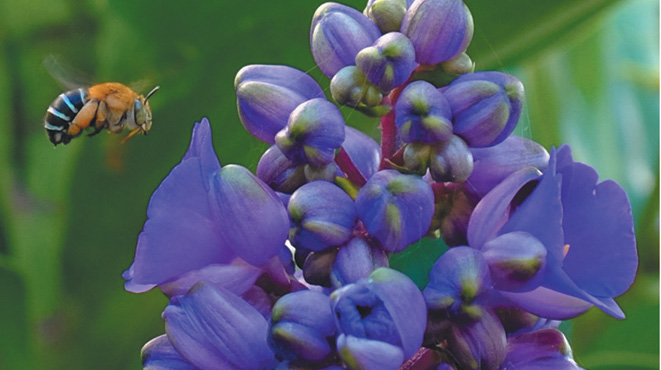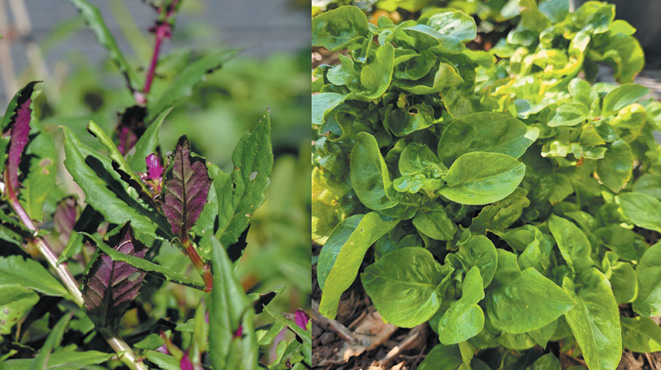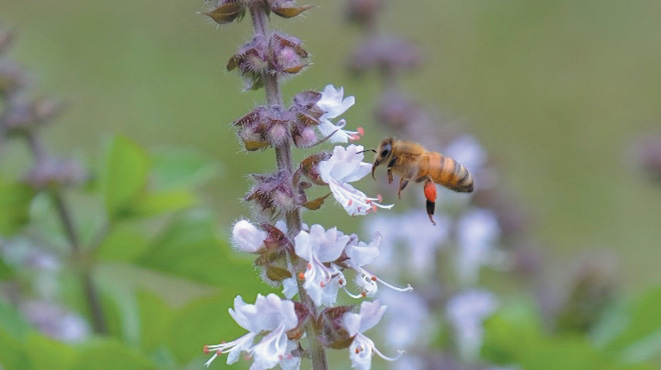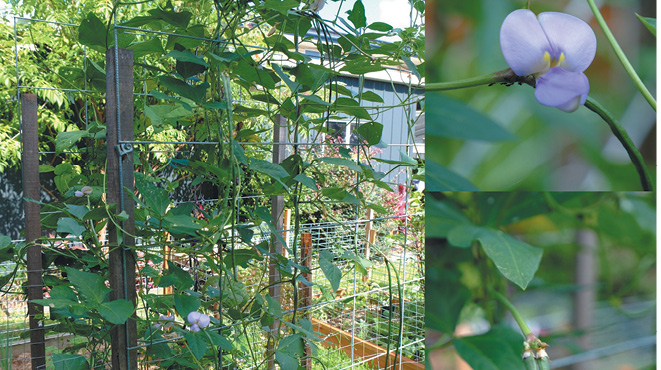
Left: Snake beans up a trellis; top right: doesn’t the flower look like a purple Mickey Mouse?; Bottom right: beans form in twos. Twist them off gently and more flowers and beans will grow. Photos by Kat Pearson.
BY KAT PEARSON, GIRL IN THE GREEN
We may have farewelled the year of the snake, but with the warm weather, we should be welcoming the growth of snake beans! Move over delicate French runner beans, hardcore subtropically ideal snake beans are the new favourite. They’re also known as yard-long beans – and while usually they’re more like ‘foot-long’, that still makes one snake bean worth maybe ten French beans!
While we’re lucky in the subtropics and can be reasonably successful with French/green beans (Phaseolus vulgaris) over summer, they can suffer a little in the heat. Snake beans (Vigna unguiculata ssp. Sesquipedalis – how’s THAT for a scientific name!), on the other hand, THRIVE in heat and humidity. They are popular in many Asian cuisines and can be blanched, stir-fried or stewed. My favourite is frying them with lots of chilli and garlic and a splash of sweet soy sauce. Like French beans, pick them while they’re young and tender, and twist them gently off the tip of the vine – more beans continue to develop from that growing point. The more you pick, the more that grow. Leaving pods of any sort on a plant (and this includes peas and sweet peas) lets the seed develop and signals to the plant that its job is done and can die now! Handily, they last ok in the fridge for a few days, so pick, pick, pick!
You are unlikely to find snake bean seedlings for sale, and at any rate, they are happier grown from seed. Check online seed retailers, or if you’re lucky, you might find a pack of Mr Fothergill’s in your local nursery. You can get dwarf and red/purple varieties, but I think the regular green ones are the most successful. Sow seeds now, and you’ll still have time for a crop before the weather cools. Push the seeds a centimetre or two into the soil, water in, and don’t water again until they have germinated (to prevent the seeds from rotting). Snake beans are enthusiastic climbers, so they need a good-sized trellis, but they aren’t the kind of climber that’s going to pull half your fence down, so don’t fret. Mine are manageable in the veggie patch with a 1.8m climbing frame and two rickety wooden stakes.