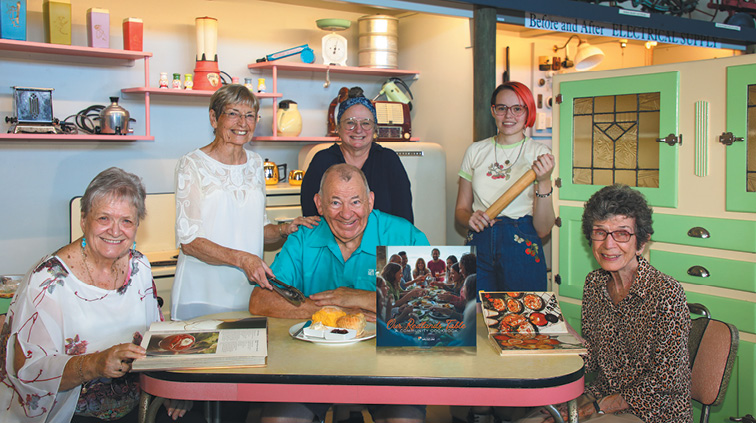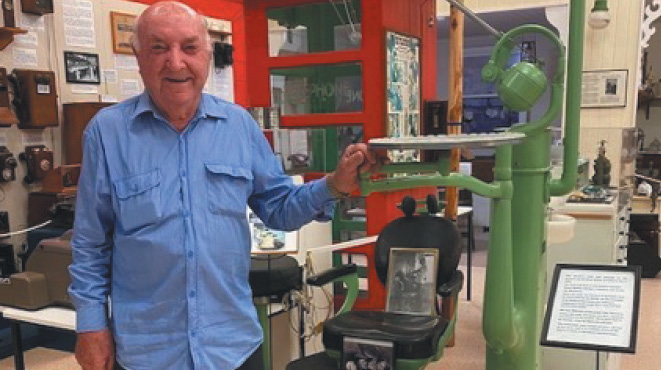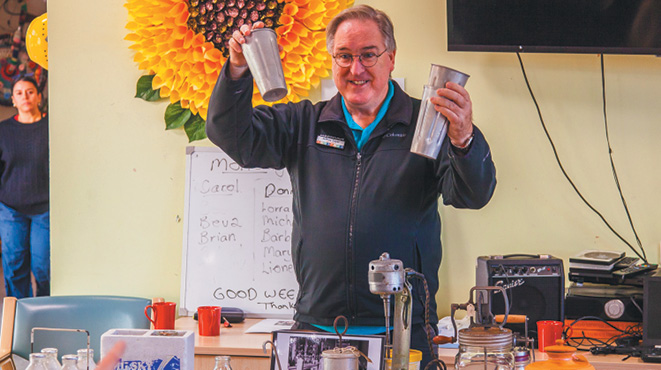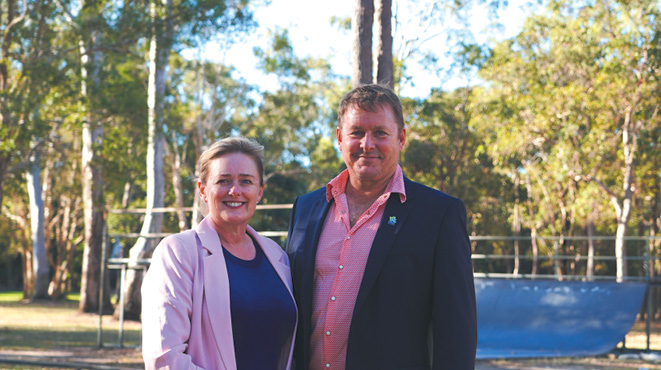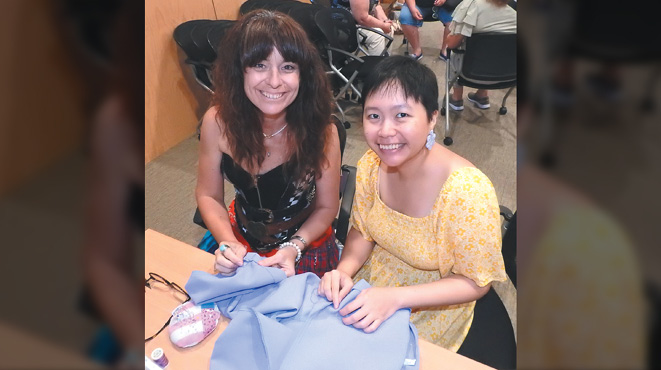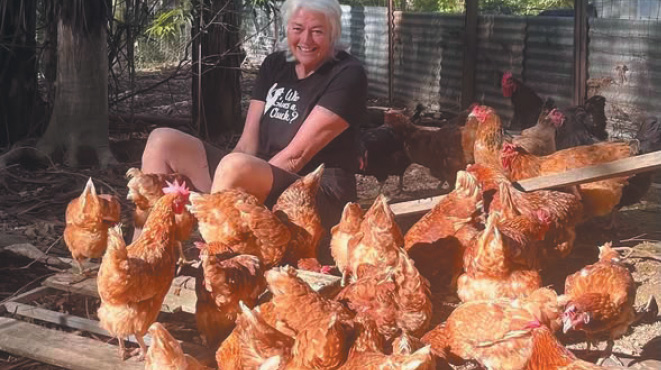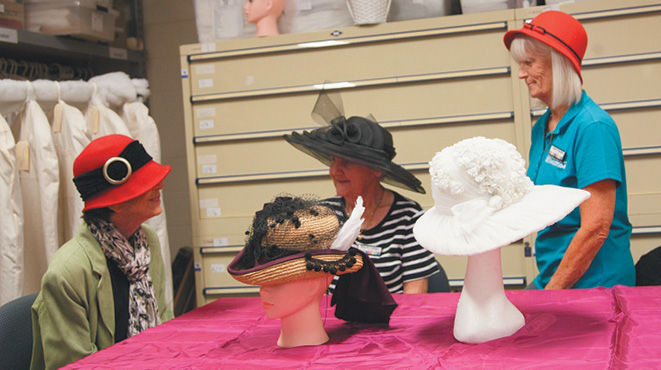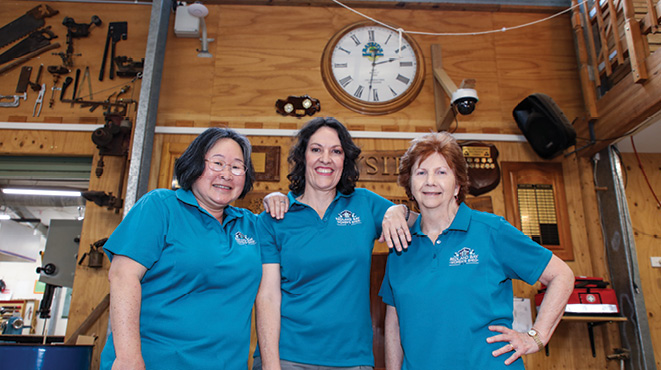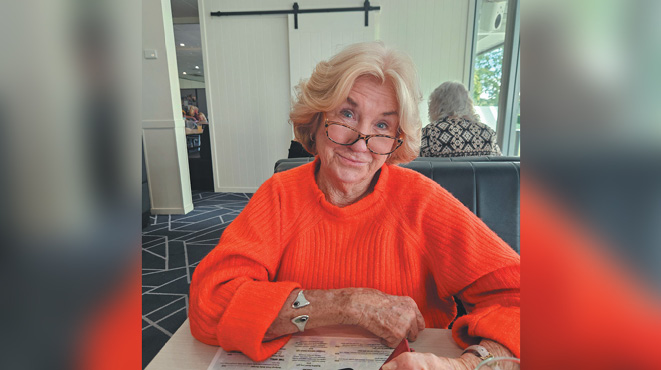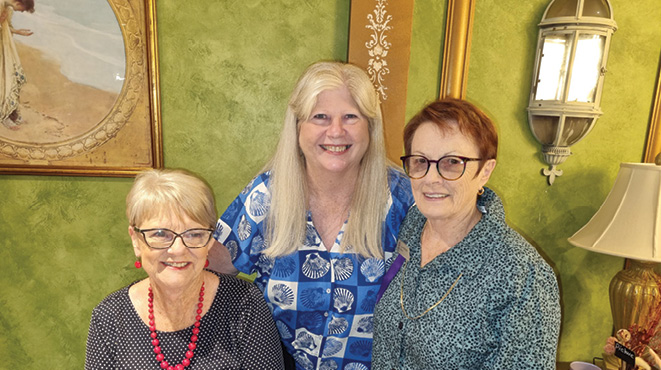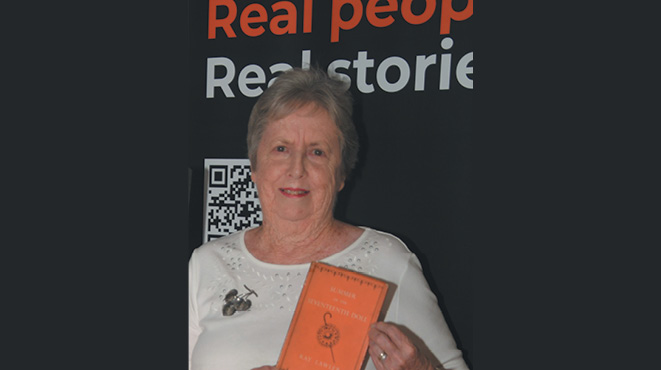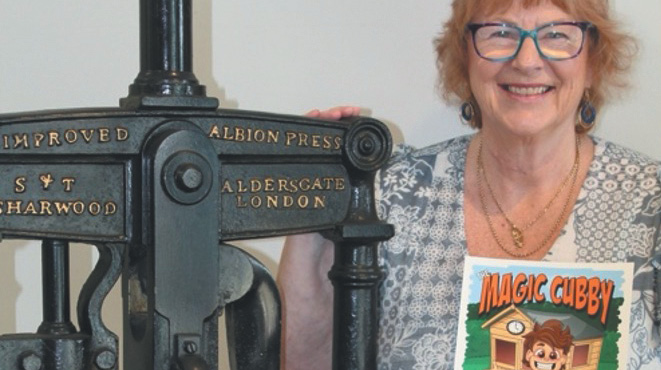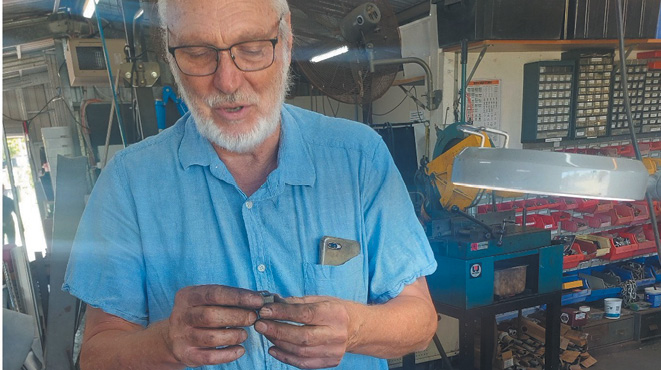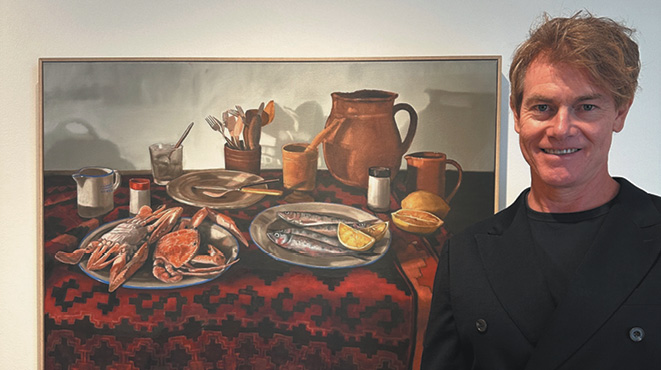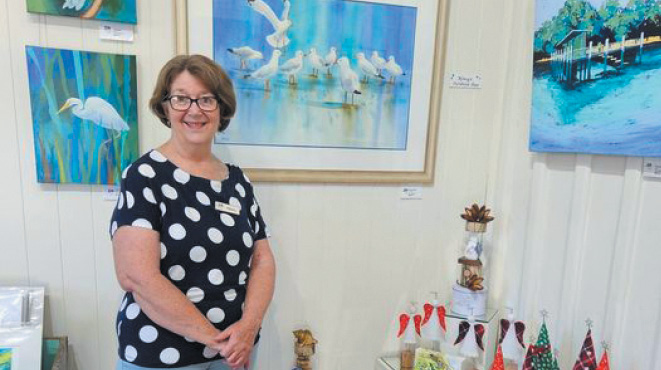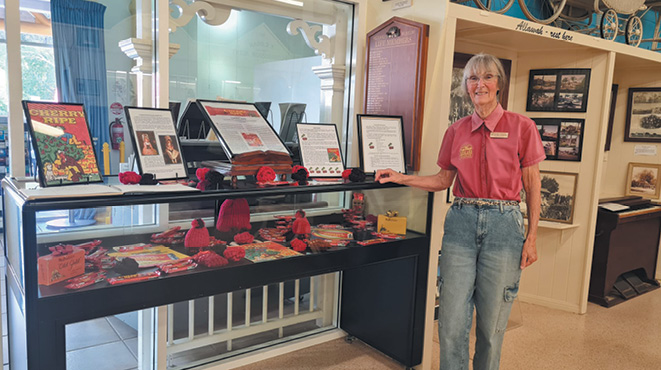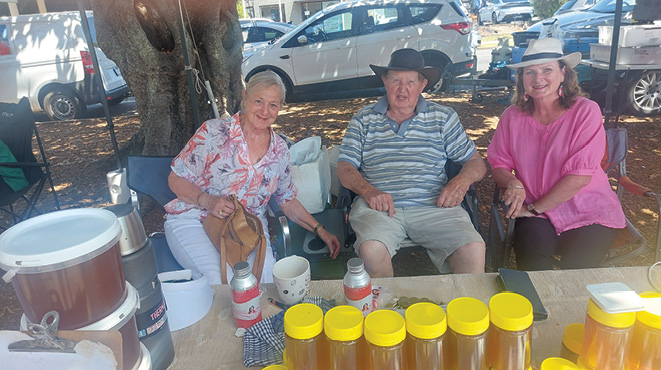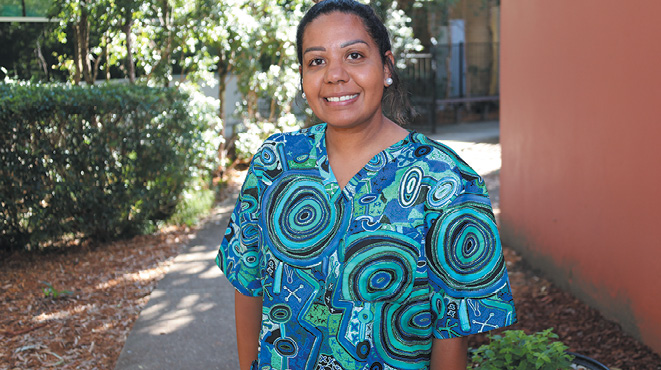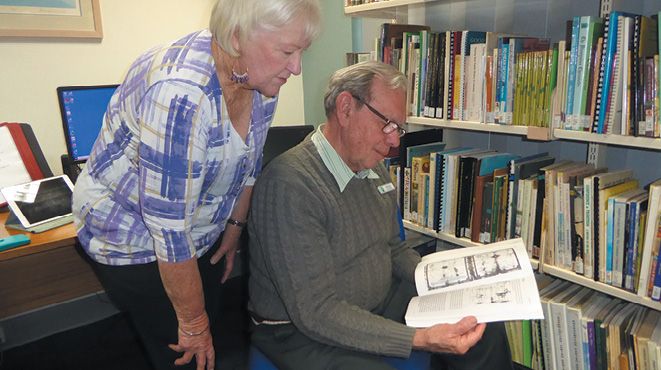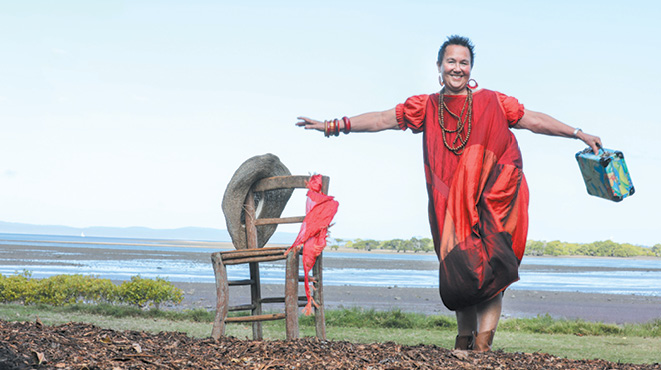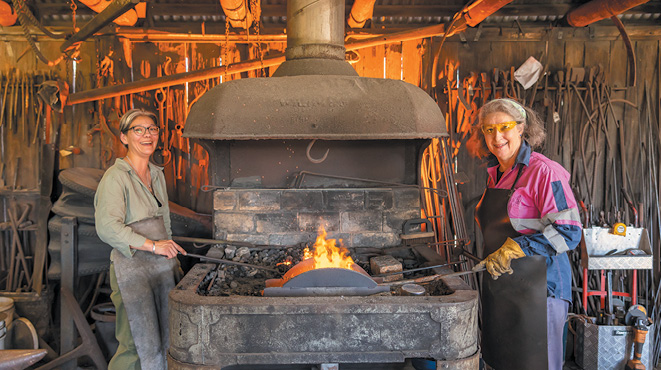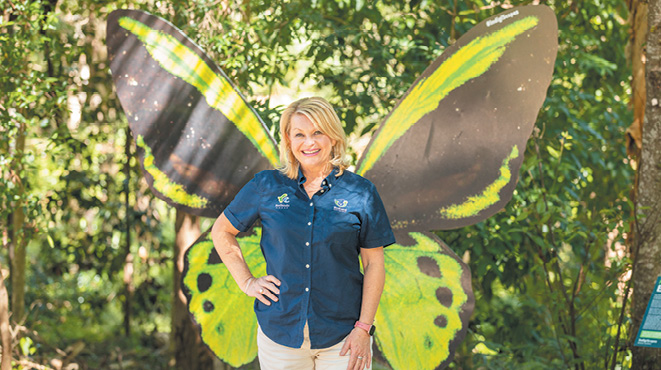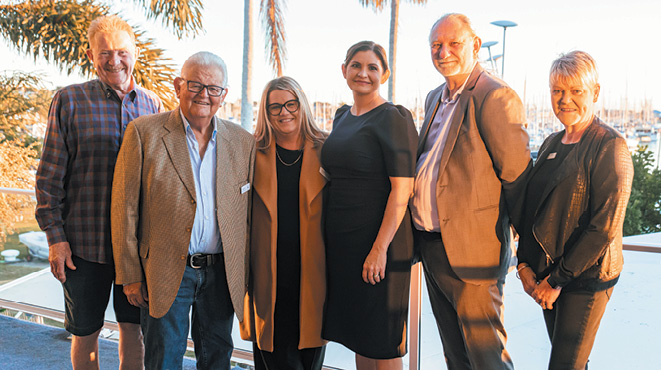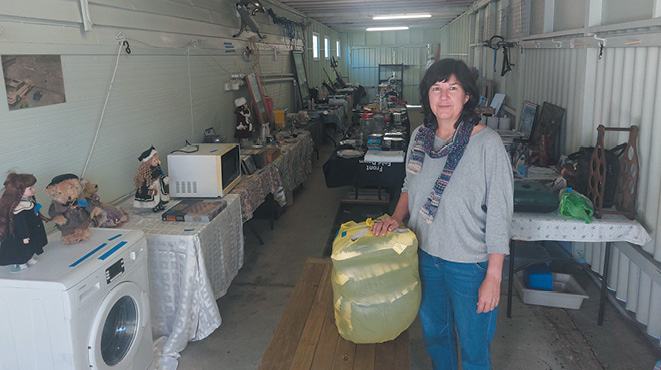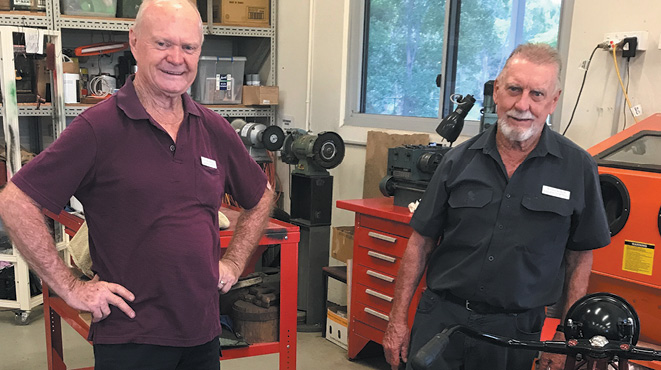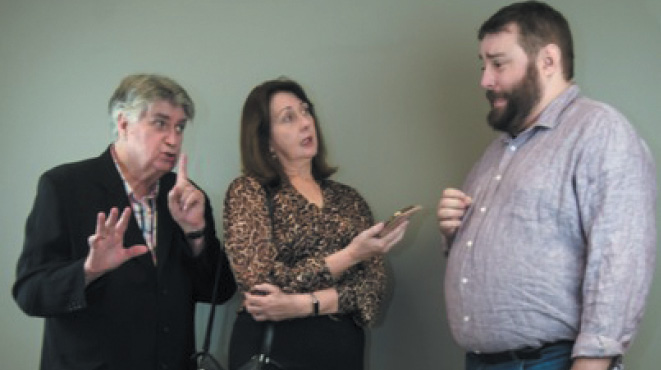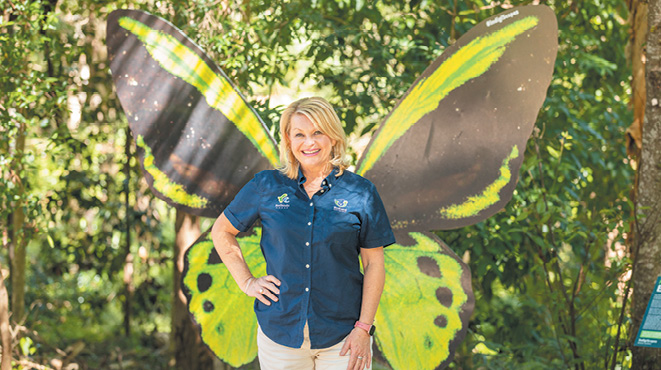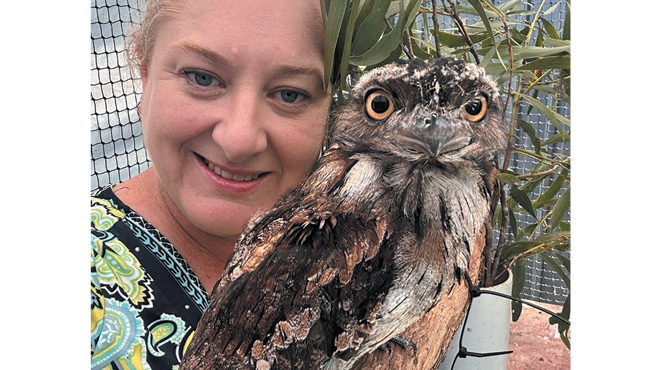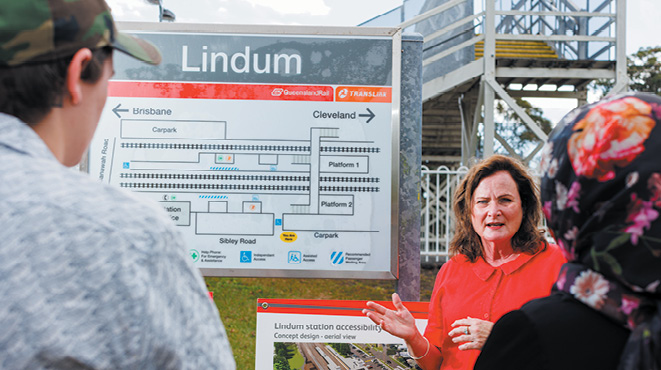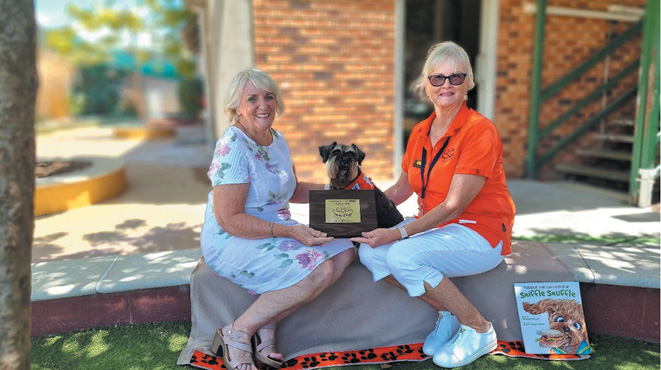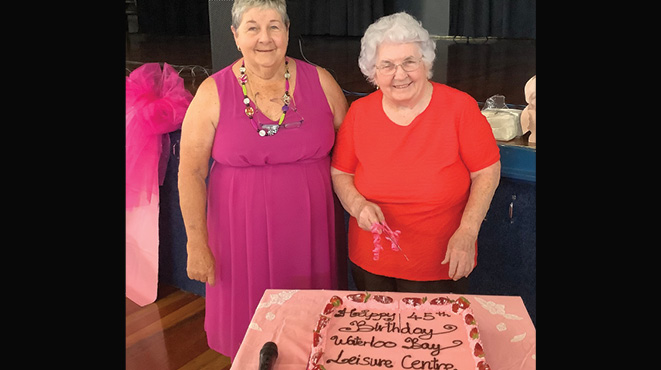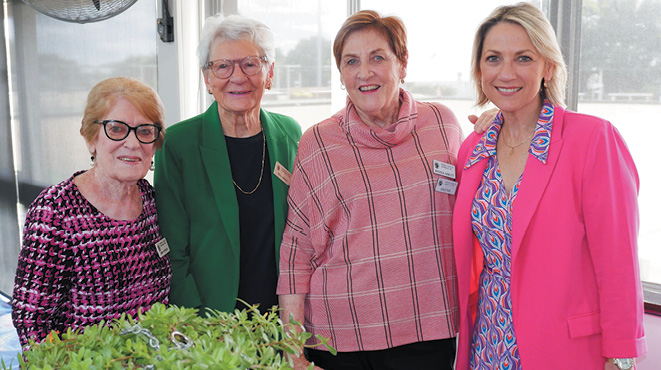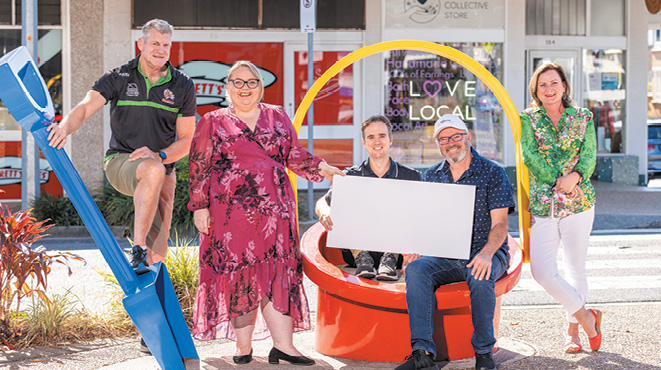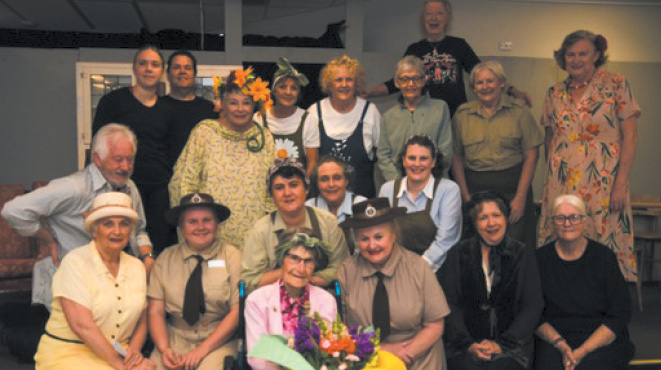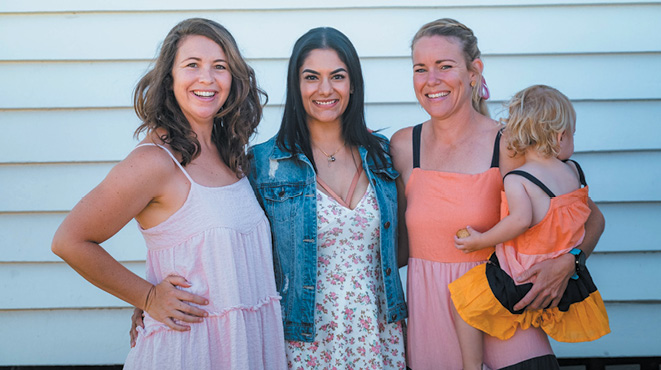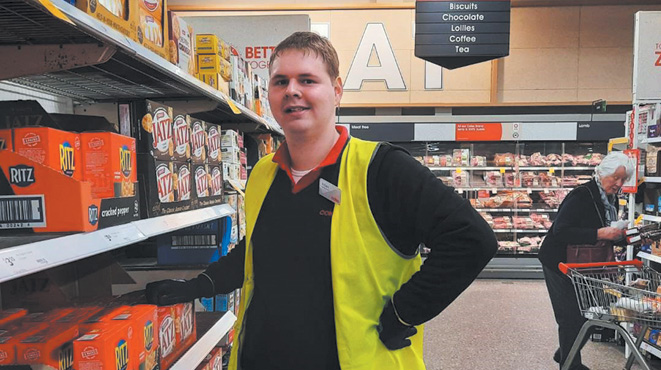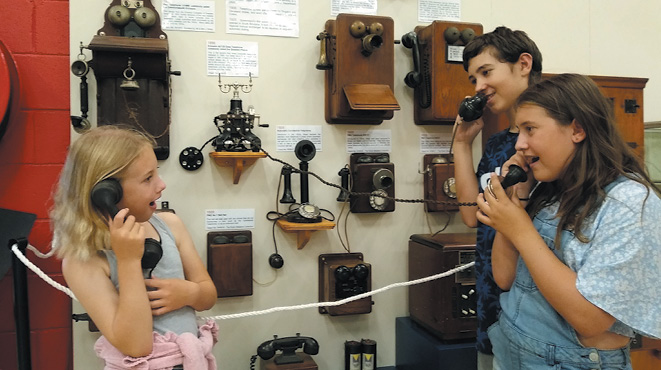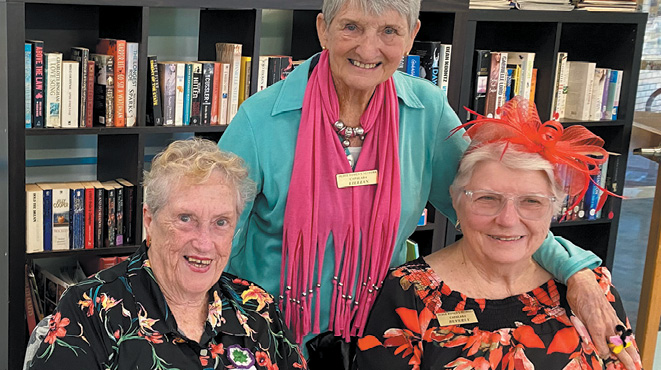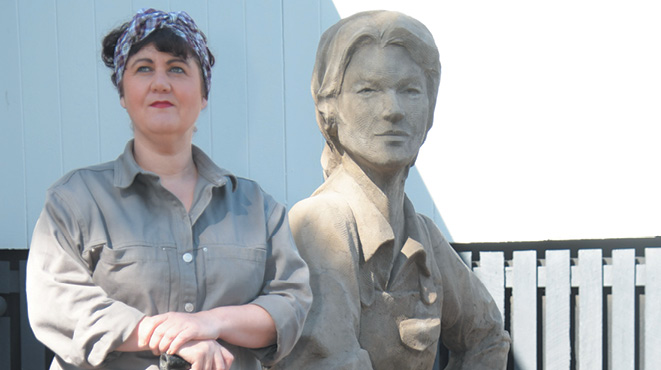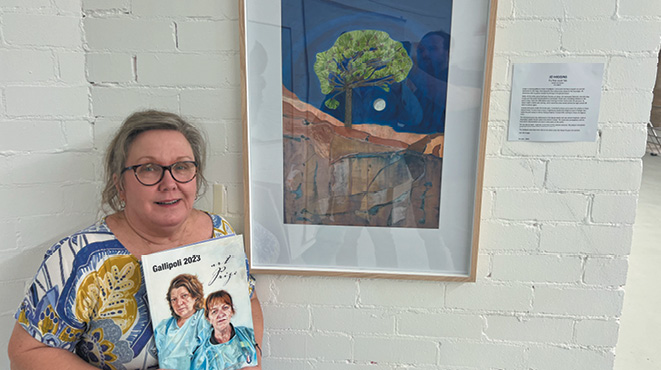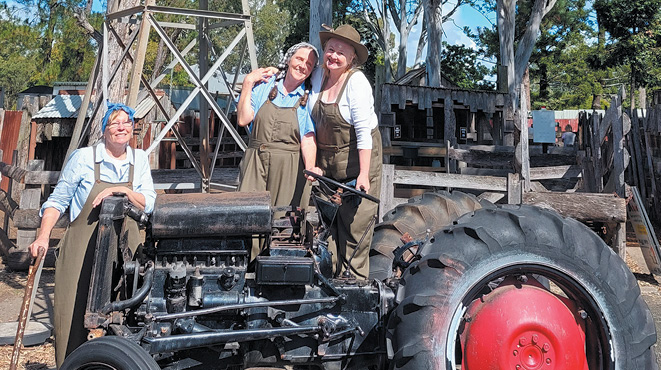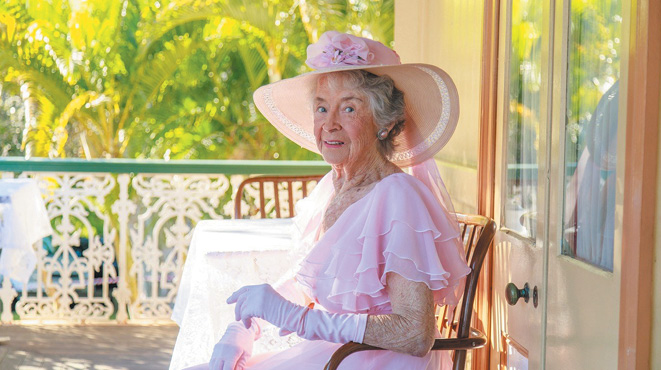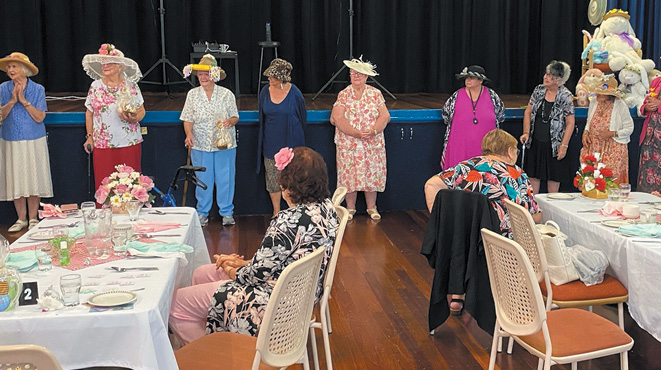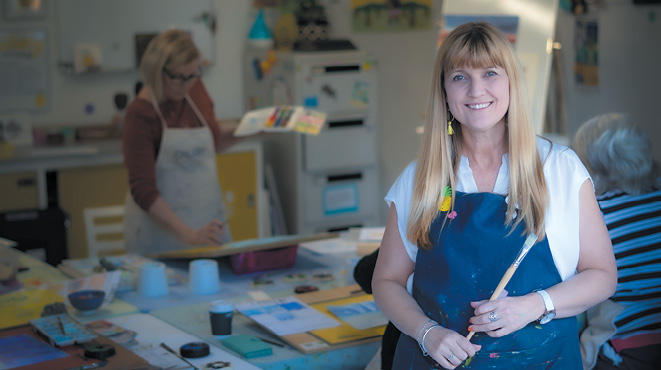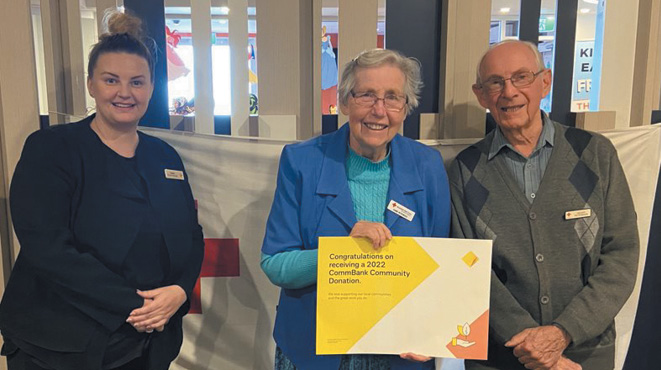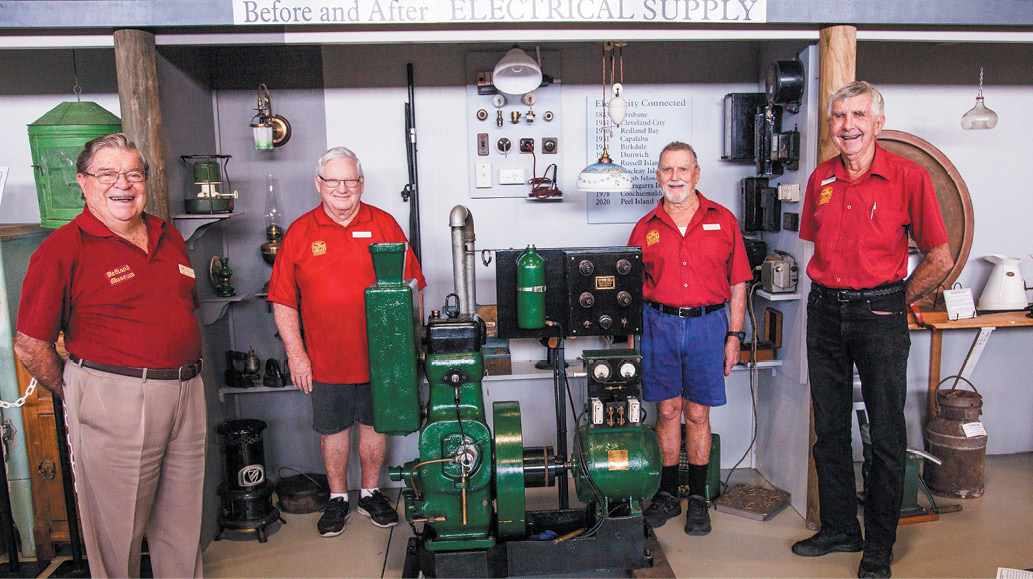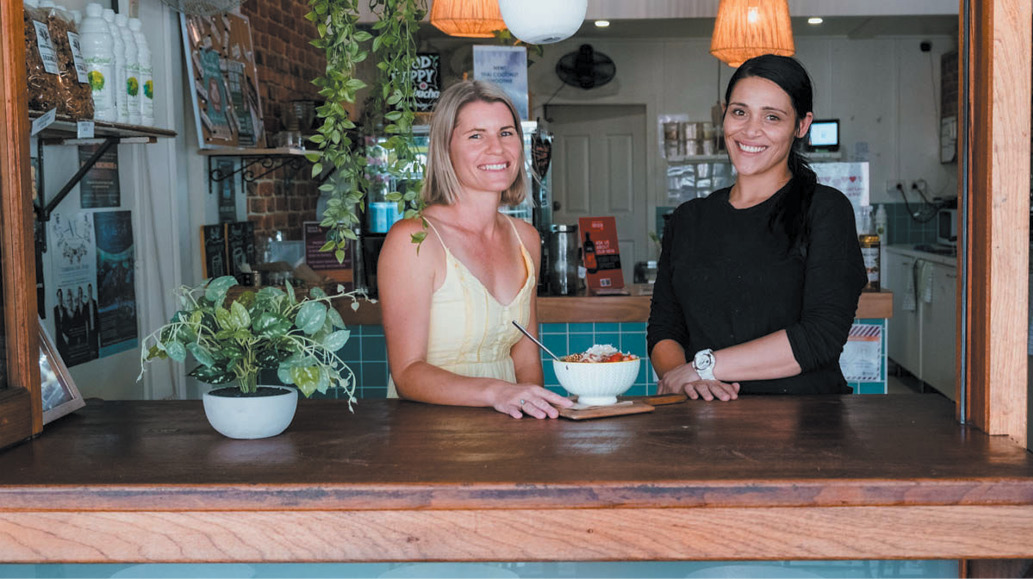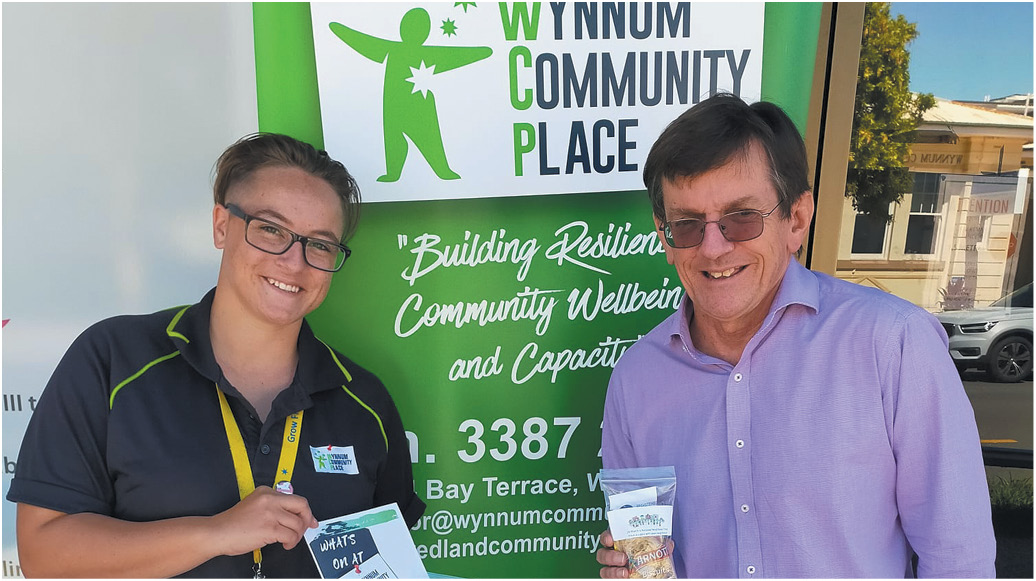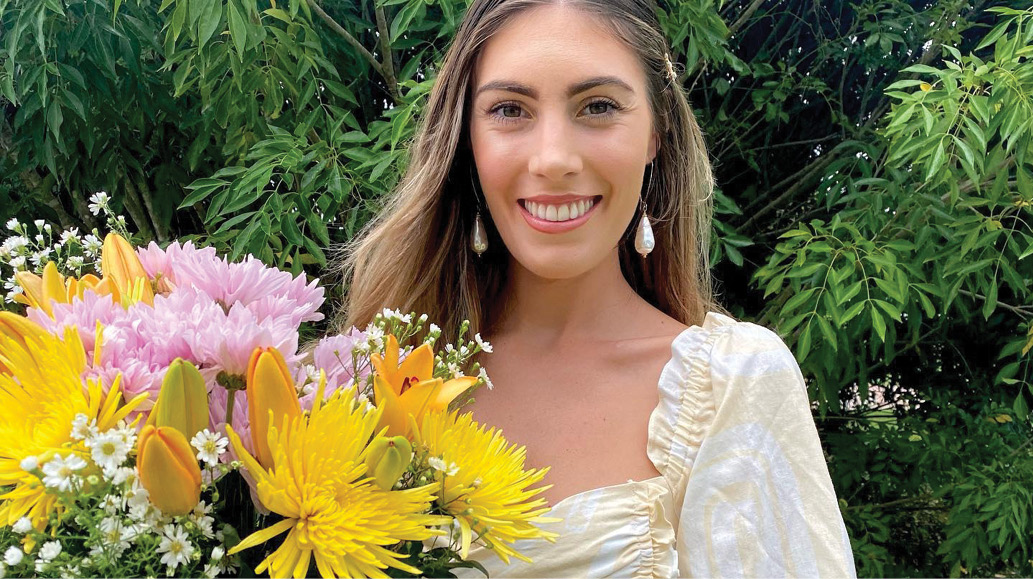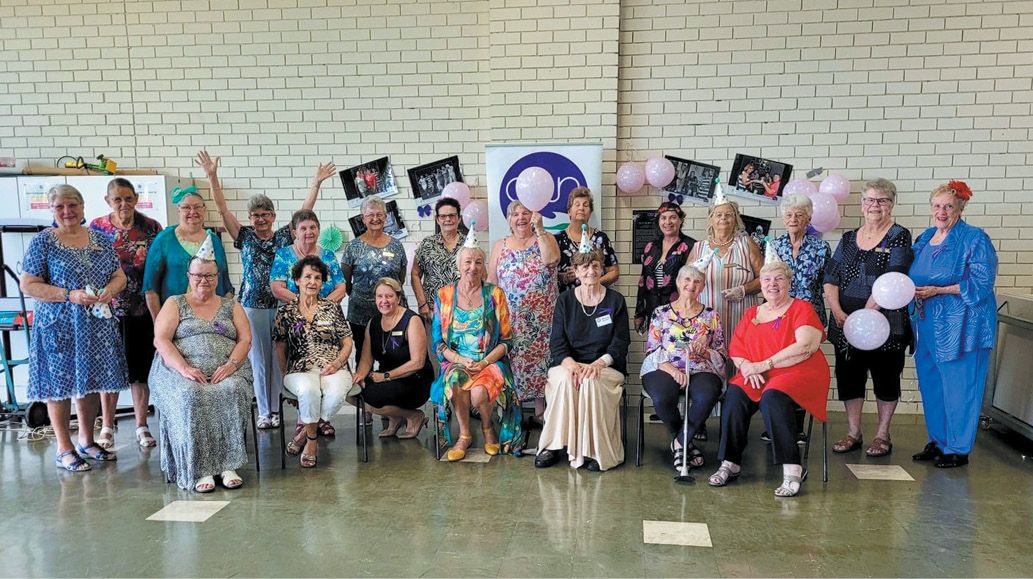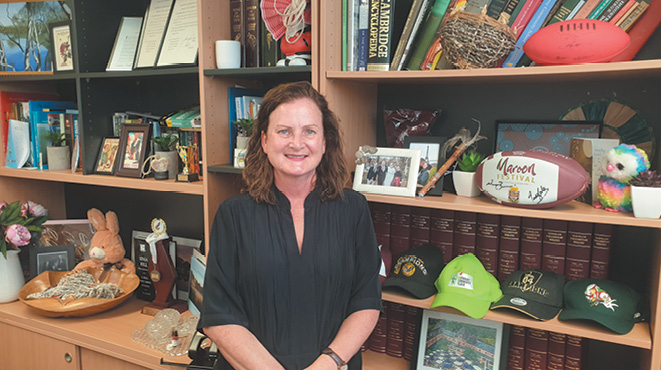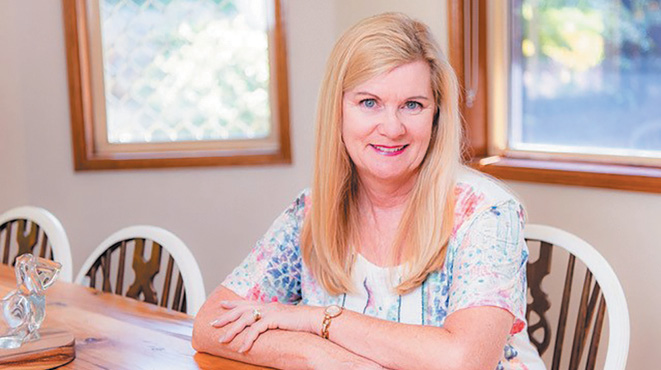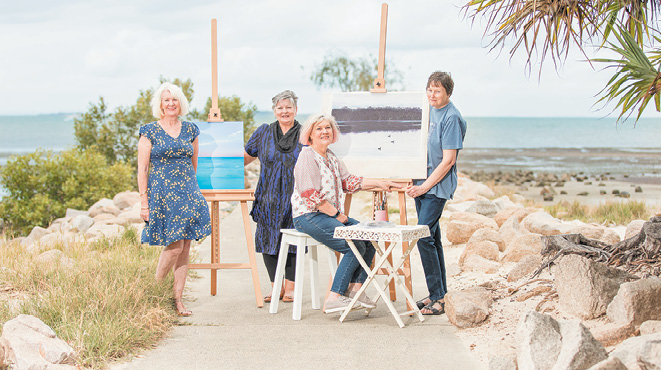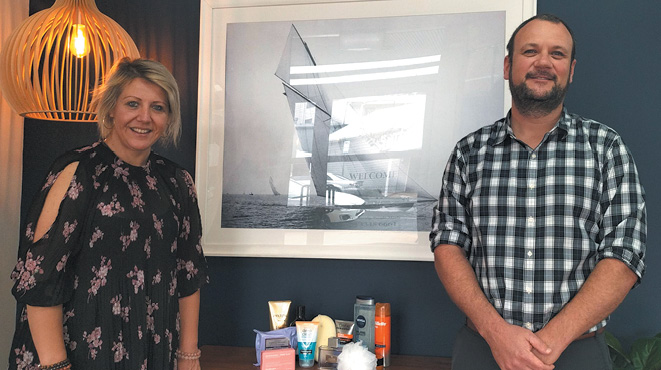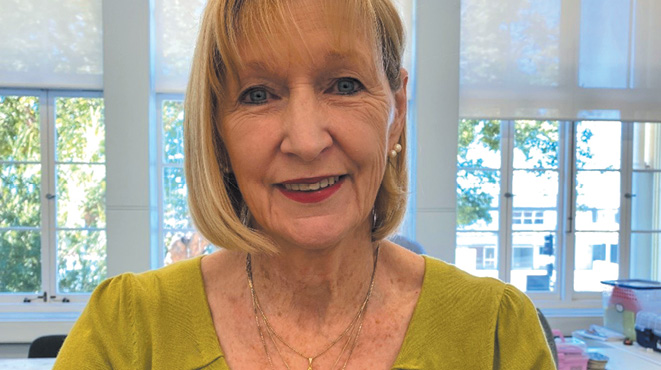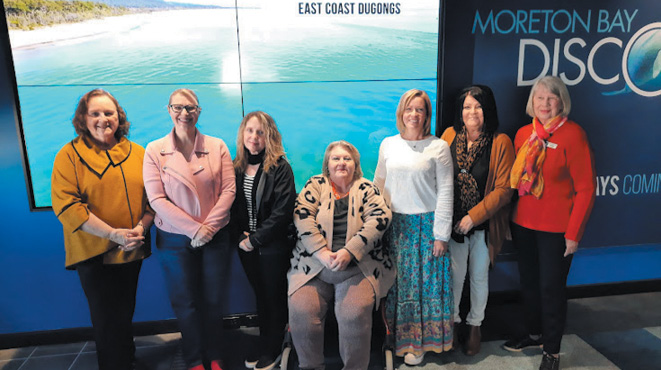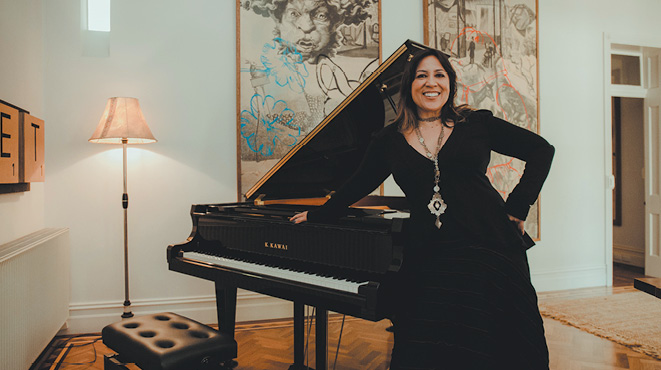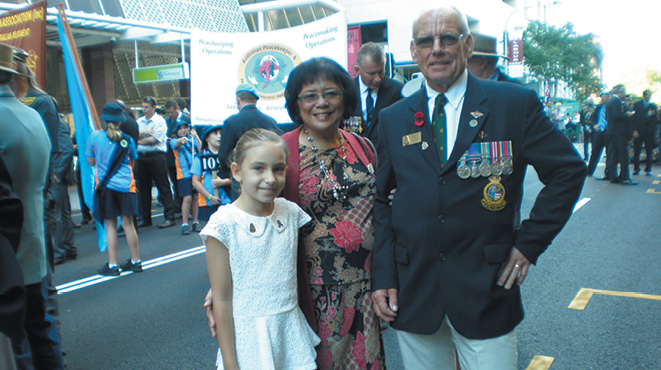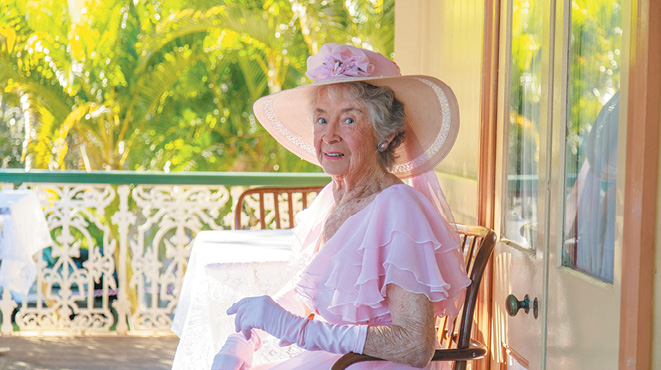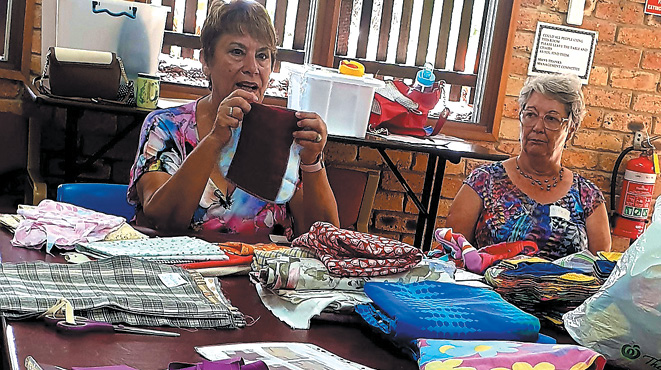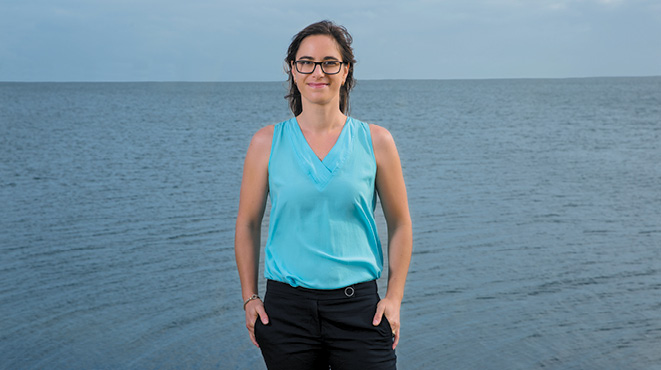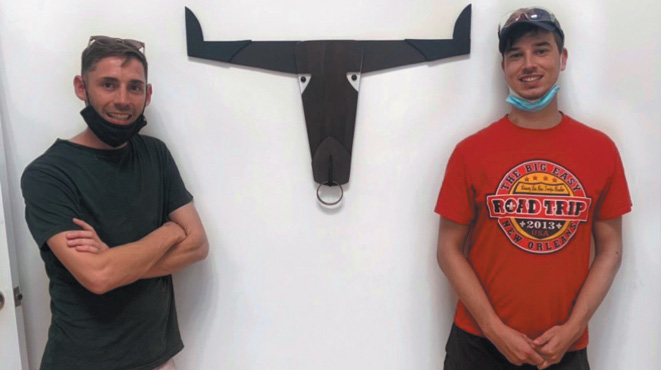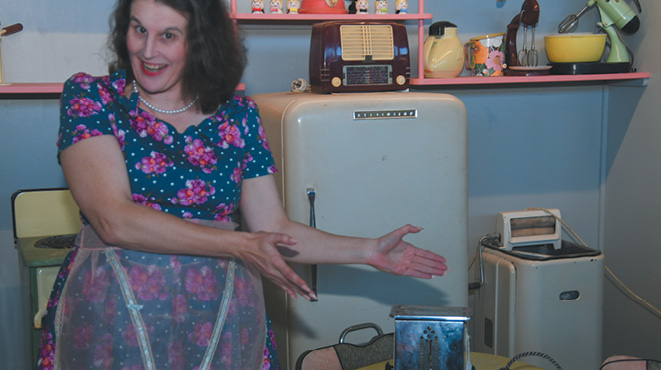
Jackie Wiley at the museum. Photo by Greg Pope.
By JAN NARY
For cooking over a campfire, a hessian bag tied around the cook’s middle was enough to protect the wearer from splashes and burns. As housework – including cooking – became an appliance-heavy lifestyle, aprons became a must-have for the woman of the house. From practical protection, they evolved into a virtual fashion accessory for the dedicated homemaker and the “hostess with the mostest”. From a masterpiece (or mistresspiece) of hand-made embroidery to a saucy little soubrette apron, the pinafore had its place.
Technical advances in kitchens have seen a decline in the use of aprons, but pinny aficionados still love them. Jan Banks, head of the textile department at Redlands Coast Museum has drawn together a rotating exhibition of nearly 60 aprons from 1890 to 2000.
“For a long time I’ve wanted to base a display on four aprons made during World War 2. They are works of art that were given to us in 2010,” says Jan.
“One in particular is a stand-out; every inch of the apron’s surface is covered in embroidery. It has no signs of use, so it was obviously made as a showpiece.”
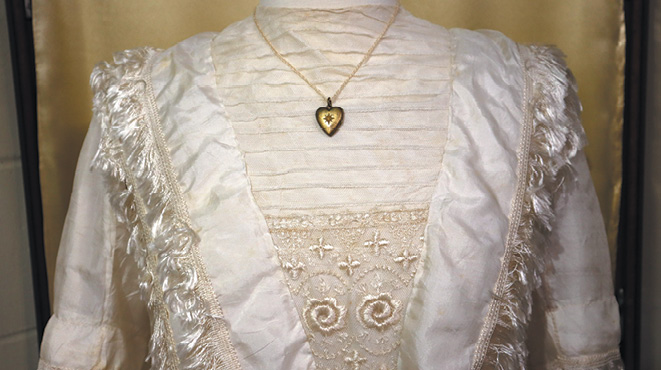
Jan points out that while aprons began as clothes protectors (“People couldn’t afford many clothes and it was easier to wash the apron than to wash the gown!”), they grew to convey a great deal about status. Women servants in wealthy late-Victorian era families usually wore plain white “bib” pinafores, white being a demonstration of how spotlessly clean the household was. If guests were present, the maids would wear fancier, ornately frilled pinafores and the lady of the house, to indicate her familiarity and involvement with running a substantial household, would often wear a black waist apron of expensive but totally non-utilitarian fabric. Another apron style based on attractiveness rather than functionality appeared briefly in the 1950s-60s, aprons fashioned from cotton or nylon ladies’ handkerchiefs.
“Aprons reached their peak in the 1950s – nearly all ads for domestic appliances or products featured an elegantly dressed woman wearing an apron – but they fell from favour in the 1960s. Women had developed a vision wider than the kitchen, though men at the barbecue led to an upswing in novelty aprons in the 1980s.”
Jan says that in addition to the museum’s collection, some of the exhibits have been loaned by members and friends, one of whom loaned her collection of twenty aprons; “I can’t function in the kitchen without a pinny on!”
“Apron” comes from Old French “napron”, a small piece of cloth. Over time, rebracketing led to “a napron” becoming “an apron”. The word “pinafore” carries its own history; the front bib was originally pinned to the wearer’s blouse.