Photos: Kat Pearson.
BY KAT PEARSON, GIRL IN THE GREEN
Surely everyone has heard of superfood turmeric by now. It’s the latest latte, capsule, powder, anti-inflammatory paste (with the added benefit of providing skin tone vibes that would fit a Simpson character), and, of course, curry ingredient. Curcuma longa comes in a variety of shades from yellow to orange and is eaten all over the world for its colour, flavour, and health benefits. But have you heard of black turmeric?
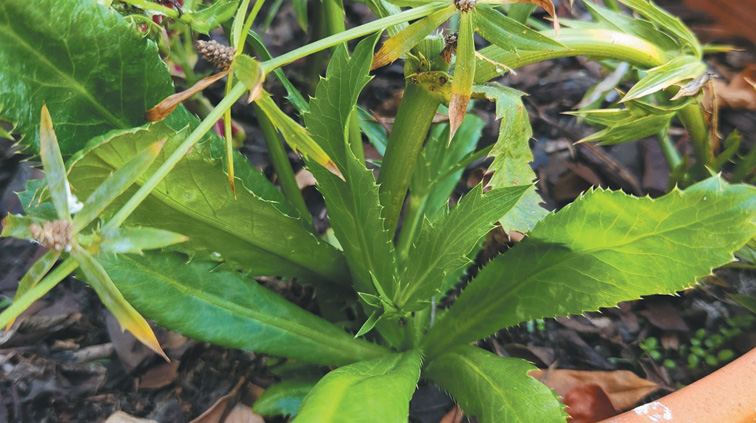
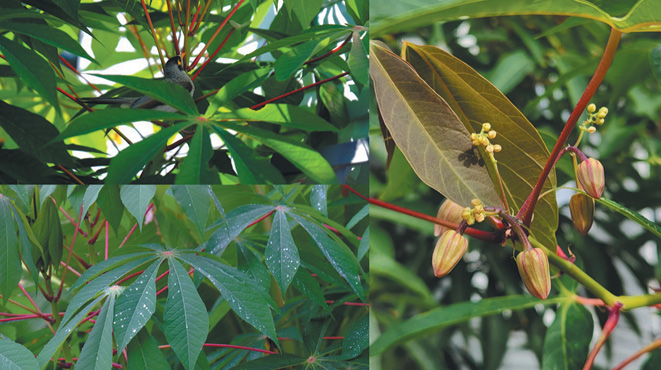
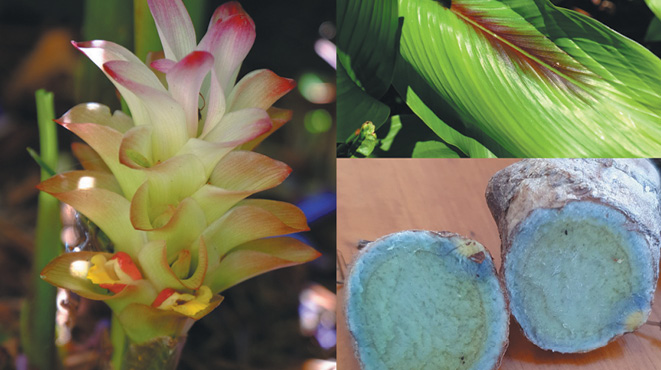
Black turmeric is a close relative of our common edible turmeric and (despite what the name suggests) is BRIGHT BLUE! The scientific name is Curcuma caesia. Caesia means bluish-grey, so I’m not really sure how black came into it, but regardless, the colour is outstanding. It grows in similar conditions to common turmeric, preferring warm, sheltered, part-shade locations in rich, moist soils. The long and broad, lance-shaped leaves have a very ornamental dark pink/purple stripe down the mid-rib (centre), and the flowers, or rather bracts, are a bit like a pinecone that is pinkish white with darker tips. The real flowers that peak out of each ‘pinecone hole’ are yellow, but they’re a little bit insignificant.
Although the rhizome is technically edible, it is primarily used medicinally and has a very bitter taste. As a plant, black turmeric is an extremely lush ornamental plant that would make itself at home in a tropical garden. Be warned, though, it completely dies back over winter. This is when you can harvest the rhizome to use or split and spread around the garden (or simply marvel at the not-quite-natural-seeming colour!). When the weather finally warms up (I’m sure we’re all ready for that now), the leaves appear first, sometimes hiding the flowers that come a little later, so keep an eye out. As a cut flower, they last well in a vase, and you aren’t harming the plant by cutting them, so bring them inside where you can see them better!
On a side note, if you really love the flowers, why not try Cape York Lily (Curcuma australasica)? It’s a native turmeric that sends its flowers up first and makes for a wonderful sub-tropical substitute for that spring-bulb impact.
ABOUT KAT
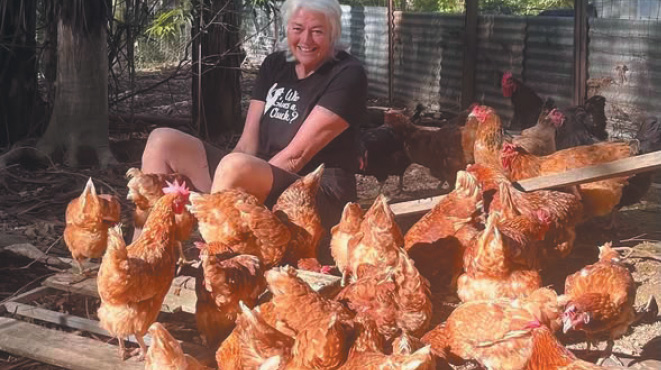
 I love gardening, growing my own food and plants in general. I’ve been working on our current garden in subtropical Brisbane for the last six-plus years, but have been gardening for much, much longer in all sorts of places. I’m an ex-engineer, recently turned horticulturist (life’s too short not to work in something you love!). I grow edibles and ornamentals in an often wild, rambling jungle, filled with birds and bugs, including a handful of pet chooks and a brand new puppy (who likes to chase said chickens, and is not averse to helping me dig a hole!).