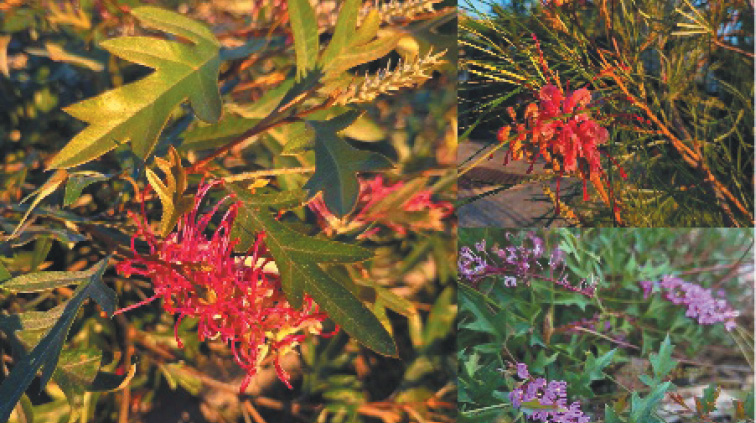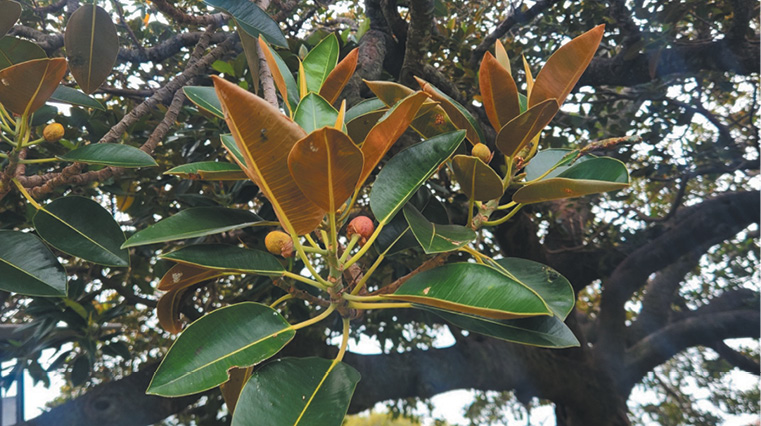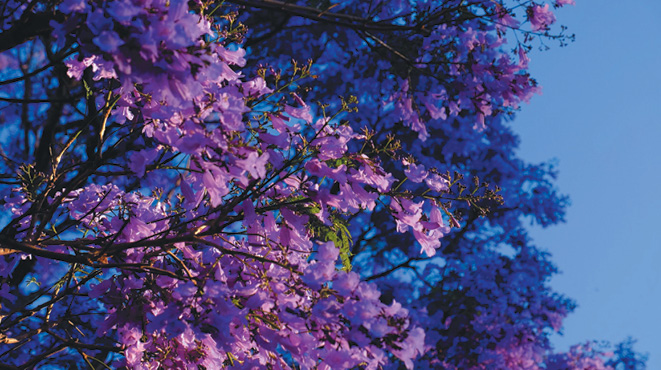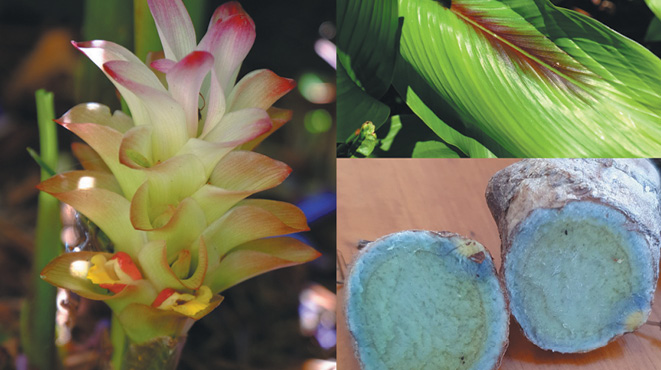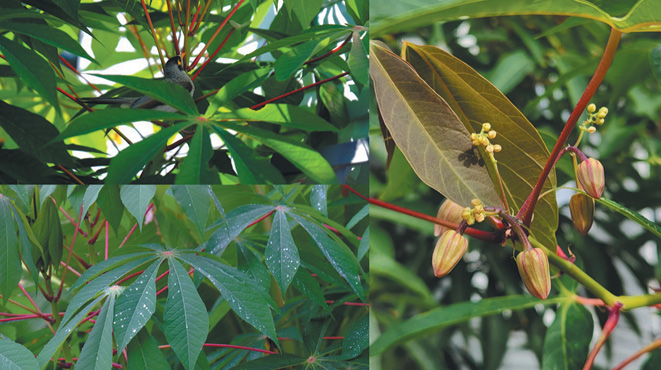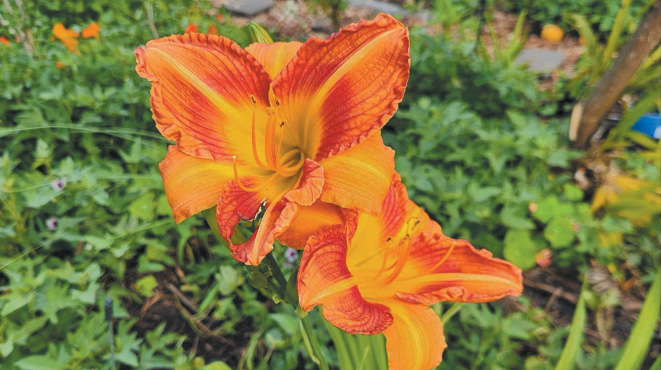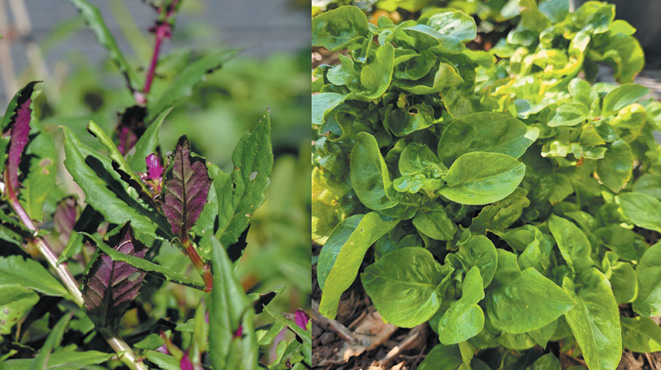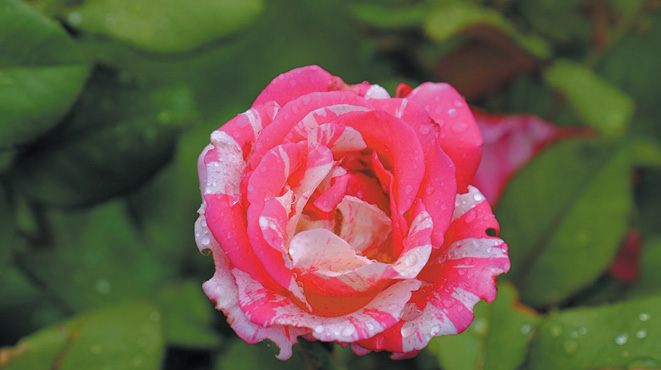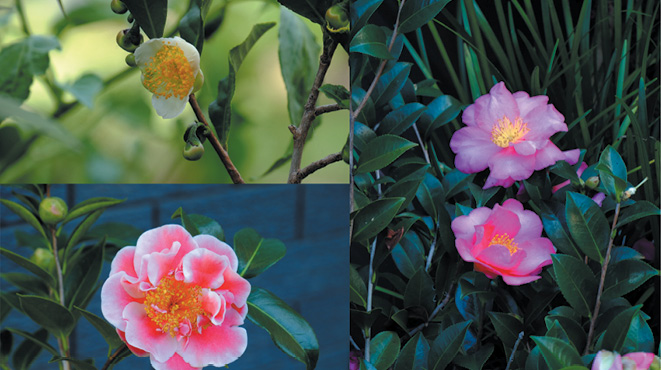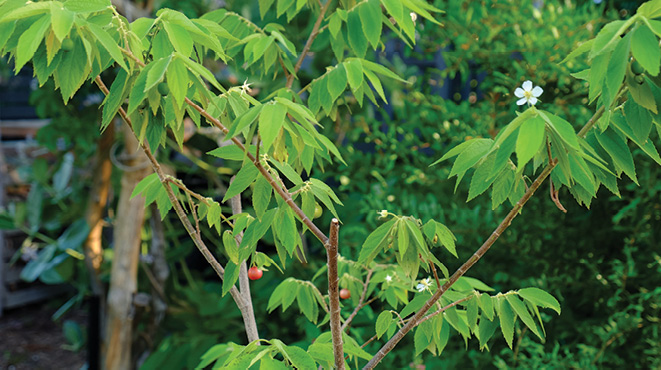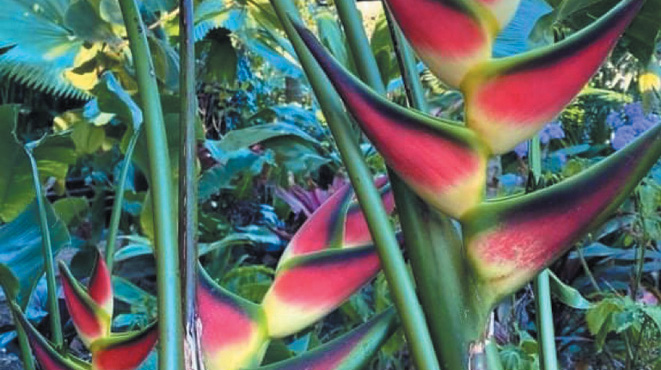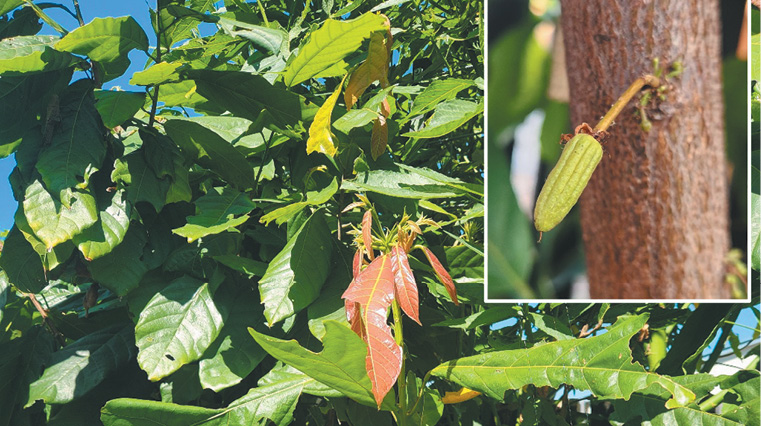
Main Image: My cacao tree, new growth is a pale orange-pink. Inset top right: my baby cacao pod. Inset bottom left: a flower born directly off the main trunk. Photos by Kat Pearson.
BY KAT PEARSON, GIRL IN THE GREEN
Stop The Press! I have a cacao pod! It may not even be the size of a square of Cadburys, but it is cause for celebration.
I brought two small cacao trees (Theobroma cacao) back from Cairns in 2021, which makes them just over five years old. This is the first year they have flowered, and I have just spotted the start of a pod!
From what I remember of my Cadbury factory tour many, many years ago, once ripe, the harvested cacao pods are fermented, dried, roasted (around here is when you start to call it ‘cocoa’), separated, ground, ‘conched’ (a fancy word for a fancy mixing process which makes the chocolate smooth), tempered and then molded. So, not long to go now before I’ve got homemade chocolate, I reckon (jokes!).
The cacao tree is native to tropical South America, specifically the Amazon Basin. Despite popularly being famous as a traditional bitter Aztec drink called xocolatl, it’s now believed that it was first domesticated by the Mayo-Chinchipe civilisation (still as a fermented beverage). Over time, it was traded across the world through Spain to Europe and in 1847, J.S. Fry & Sons in England combined cocoa butter with cocoa powder (and sugar) and made a solid chocolate bar.
T. cacao is a member of the Malvaceae family, the same as hibiscus. It is cauliflorous, which means it bears its flowers directly on the main trunk and branches. Being an understory tree of tropical rainforests, it likes a warm, humid spot in dappled light and is not tolerant of frost. They are a small tree, growing up to 12 metres in the wild, but usually maxing out at 4-8 metres in cultivation, and they can be pruned much shorter – mine are about 2 metres. In the right conditions, the trees will flower throughout the year, often in response to rain periods, and flowers are pollinated by midges and other small insects (the only good thing about midges?). It takes five to six months for a pod to ripen after it sets, during which time it can grow as big as a football. This sporadic fruiting makes harvesting labour-intensive as the pods don’t all ripen at once.
As for my lonely pod, I’m going to try eating the pulp fresh – apparently it’s sweet. Fermenting and roasting the beans seems like a step too far, but you never know.