CONTRIBUTED BY ADELIA BERRIDGE
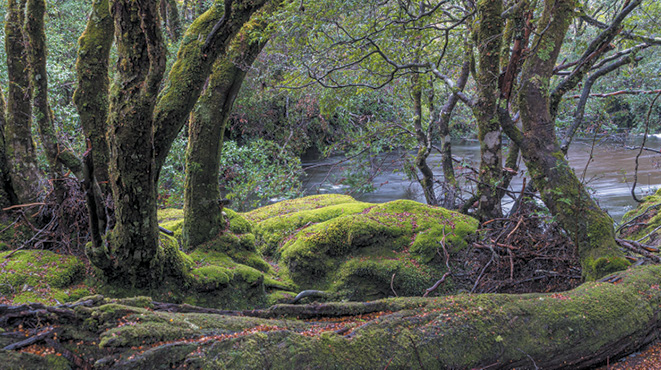
When a Redland City Council Biosecurity Officer came across what appeared to be an old log crossing on the upper reaches of Tingalpa Creek at the end of March 2021, he thought he’d come across an old timber-cutters’ crossing. He was right, and a 2002 aerial map showed a track through the thick bush east of the crossing, leading out to Avalon Road.
In 1842, surveyors produced a map of the Moreton region, showing a track that led from Raby Bay in the east and west to Cowpers [Coopers] Plains and Ipswich. The track crossed Tunim [Tingalpa] Creek just north of a large waterhole, now thought to be part of the Leslie Harrison Reservoir.
A Mount Cotton Road Capalaba resident since the early 1900s, Iris Daley described the region in a 1994 oral history interview:
“Well, we were told that the Aboriginals used to come right up from way up Ipswich and further on, Beaudesert and that, because those lagoons never went dry. They were very deep. We used to swim in them, and you could be swimming along when, all of a sudden, it would get icy cold, which would indicate how deep it was.
“We were told that Capalaba to the Aboriginals meant place of many waters. There were fish, mullet and perch; there were platypus. It was running water. Running creeks would run into the big lagoons and continue down to Tingalpa Creek eventually. Most of it is now underwater – there might be a little bit of it on the hillside, further up towards the Mt Gravatt/Capalaba Road, but most of it is now under water.”
The rediscovered crossing appears to be too far south to have been the early track crossing, and more likely to have been a timber-cutters’ crossing. The old track crossing is believed to have been near Allambie Crescent and Geldart Road.
James Campbell set up his first sawmill in 1876 on a 640-acre property that wrapped around land owned by McCaffrey. The road was known as Sawmill Road for almost a century, and in 1964 it was renamed Avalon Road. The sawmill on Wallaby Creek provided employment in the district.
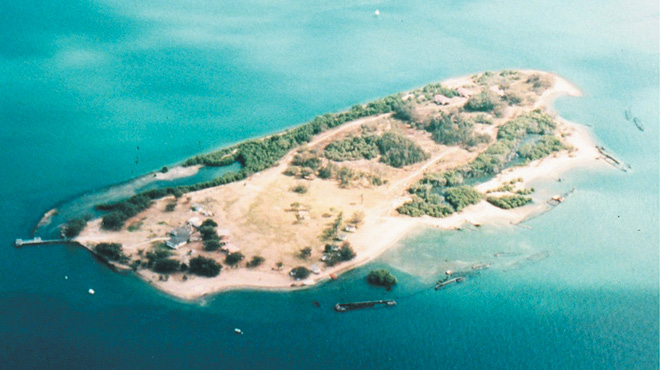
In 1878, timber licences were issued to six local men. Timber milled at Campbell’s was predominantly hardwood, and the sawn timber was taken by bullock wagon to the lower reaches of Tingalpa Creek, where it was loaded into cutters for delivery. Some of the timber from Campbell’s mill was used in the construction of the penal colony at St Helena Island.