A pile-on. It starts as a targeted snipe at someone in an online post. If it remains a solitary snipe, that might be the end of it. But if it’s the opening volley in an orchestrated attack, it can signal the beginning of a socially destructive campaign that can damage individuals, warp public perceptions of reality and shift our concept of what’s acceptable. A single attack may be ignored, but the more we hear something repeated, the more likely we are to believe it, even if our logic initially dismissed it. Even if it’s not true. Even if the attacks are anonymous. Even if they’re driven by nothing more than boredom.
Pile-on. Repetition. Like a hall of mirrors at an amusement park, the same distorted image is reflected ad infinitum. Nazi Joseph Goebbels is credited with saying, “Repeat a lie often enough, and it becomes the truth”. One person’s lie becomes another person’s truth.
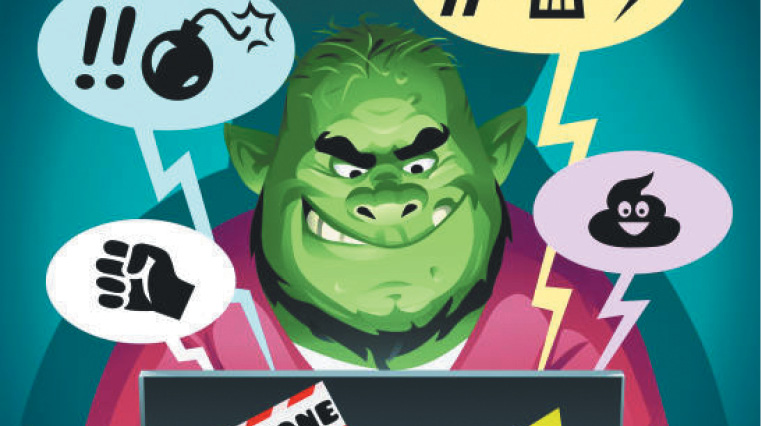
Online pile-ons are one of the most corrosive forms of modern harassment – and because they can be nameless, they are often hard to source and therefore hard to refute. The sheer volume of a strategically planned attack can swamp any attempts at meaningful debate or denial, give a false impression of universal consensus and dissuade dissenting individuals from joining the melée.
The effects on a targeted individual can be significant, particularly for a public figure. Mental exhaustion, hypervigilance and a sense of isolation are possible symptoms, as well as effects on families. On a broader social level, the impact is alarming.
Society’s view on what is acceptable is a constant work in progress; social practices and attitudes once regarded as radical – women’s suffrage, the right to education – have become the norm. Those changes have a profound effect on politics and government policies.
Conversely, practices like pile-ons can, over time, lead to harassment becoming a form of entertainment, empathy being perceived as weakness, erosion of trust and cynicism about the value of community involvement. This reduces the pool of skilled and well-intentioned community members willing to consider front-line public roles. Robust debate can devolve into a pecking party; once blood has been drawn, the victim is fair game for all attackers.
Vigilance, fact-checking and pondering the possible source and outcome of a pile-on is possibly the best defence against letting the noise overwhelm the facts and allowing the community to become divided by disinformation. Democracy is too valuable to allow one person’s lie to become another person’s truth.
A side note: Hobbylos (hobbyless behavior) is a German insult for people who waste time trolling or bothering others online and offline.